Alessandro Maganza
Alessandro Maganza (1556–1630) stands as a distinctive figure within late Italian Mannerism, a style he carried forward and adapted primarily in his native Vicenza and the cosmopolitan hub of Venice. Though often overshadowed by the monumental figures of the Venetian High Renaissance, Maganza was an essential generator of devotional and decorative cycles across the Veneto region during the transition into the seventeenth century. His career, marked by rigorous technical proficiency and an increasingly expressive emotional register, spanned a period of profound artistic change, influencing regional tastes well into the Baroque era.
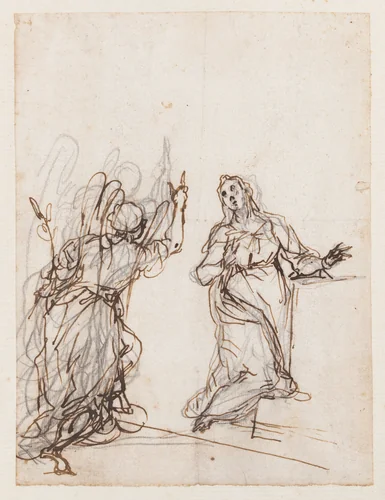
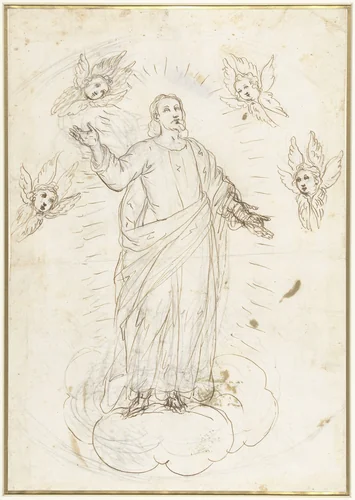
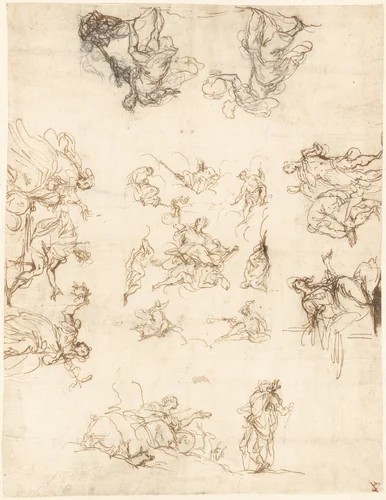
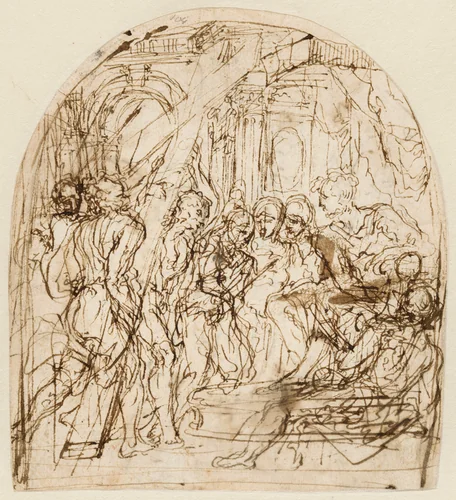
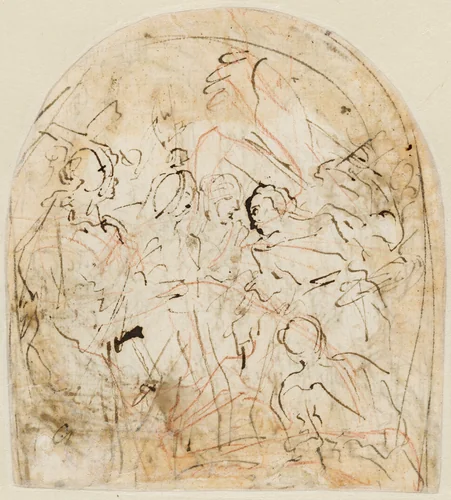
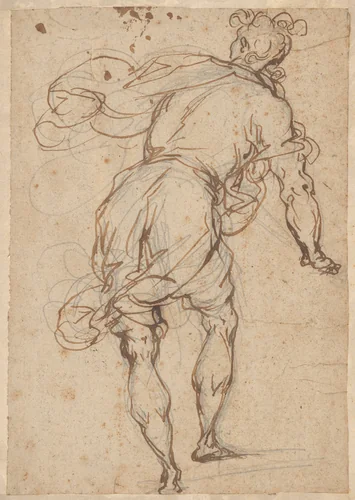
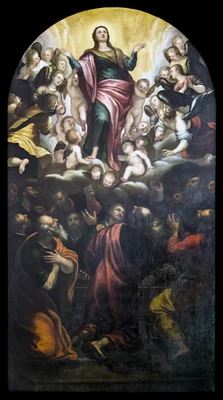
Maganza specialized in the dramatic, elongated forms characteristic of the Mannerist sensibility, often employing complex compositions that maximized narrative tension. While recognized for Alessandro Maganza paintings in his time, his surviving legacy today rests significantly upon his preliminary designs and drawings, many of which attest to large-scale commissions. These works reveal a mastery of figure placement and architectural setting, whether articulating the detailed theological narrative of The Annunciation or grappling with the weight and pathos of repeated subjects, such as his numerous studies for Christ Carrying the Cross. His versatility is particularly evident in the highly complex architectural renderings, such as the demanding structural and allegorical arrangement seen in A Compartmented Ceiling with Allegories and Myths. The overwhelming intensity found in pieces like Hemelvaart van Christus omgeven door cherubijnen illustrates his commitment to devotional scale, a hallmark of counter-reformation art.
Maganza’s foundational role in the Vicenza school ensured his designs were widely disseminated and highly valued. Today, his output is preserved in institutions globally, including the National Gallery of Art, the Rijksmuseum, and the Metropolitan Museum of Art, reflecting a consistent museum-quality standard maintained across centuries. It is perhaps a telling detail of his professional consistency that so many of his devotional designs survive in multiple versions; clearly, the market demanded efficient, high-quality production. For contemporary audiences, Maganza’s technical skill remains highly valued, and his original drawings are frequently digitized and made available as downloadable artwork, providing scholars and enthusiasts royalty-free access to this important late Mannerist master.
Source: Wikipedia · CC BY-SA 4.0