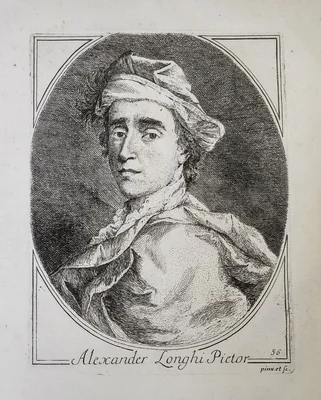
Alessandro Longhi
Alessandro Longhi (1733-1765) stands as an essential figure in the final flourishing of eighteenth-century Venetian portraiture. Active for three decades, Longhi utilized both oil painting and etching to create an invaluable visual chronicle of the Republic’s declining years, focusing rigorously on documenting the nobility, state officials, and contemporary artists who constituted the social fabric of Venice.
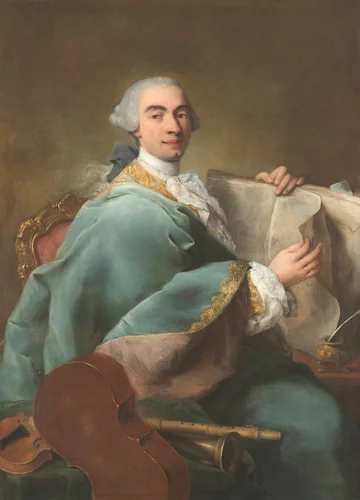
Longhi is best recognized for his compelling oil portraits, which often presented the sitter in a full-length format reserved for important figures. In this, he perpetuated the tradition established a century prior by Sebastiano Bombelli, using the canvas to legitimize the status of his patrons. Longhi exhibited a particular, almost zealous focus on the precise depiction of power, meticulously rendering the complex folds of official robes, the texture of fine fabrics, and the detailed heraldry of emblems of office. In these works, one observes that the sheer materiality of the costumes sometimes seems to overshadow the individual expression of the sitter, lending his portraiture a powerful, if slightly formal, distance.
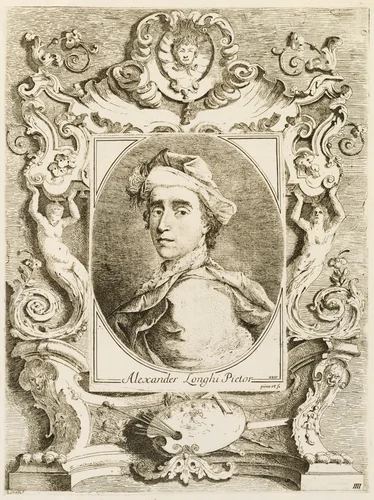
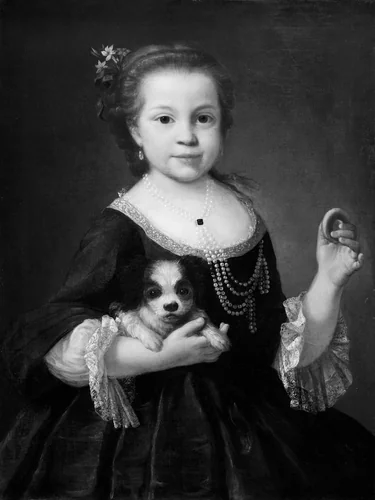
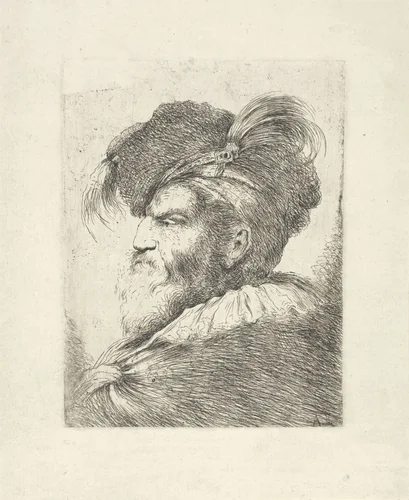
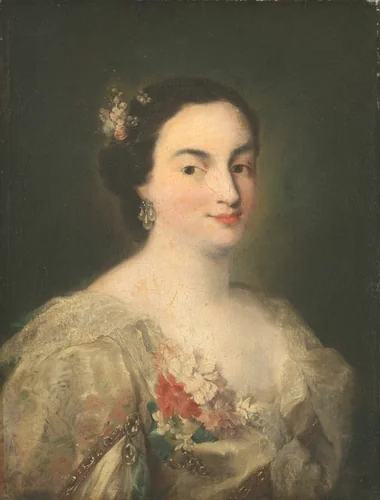
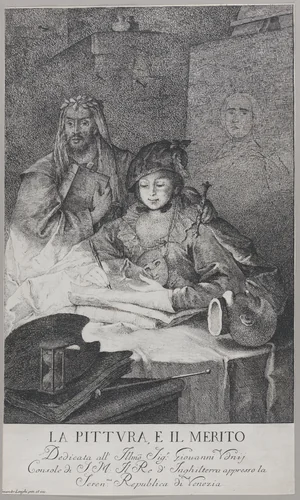
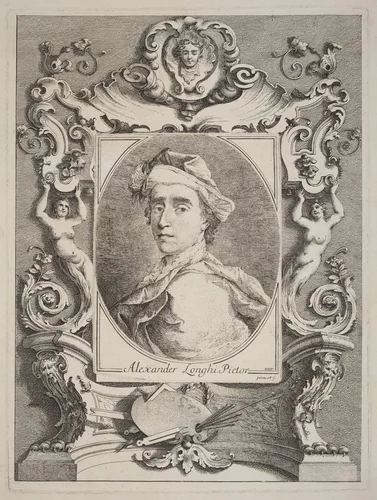
Beyond his work in oils—which include refined pieces like Portrait of a Young Woman—Longhi was a sophisticated printmaker. His most enduring contribution in this medium is the Compendio delle Vite de' Pittori Veneziani istorici piùrinomati del presente secolo, a critical volume featuring a series of meticulously delineated portraits of contemporary Venetian painters. This ambitious project serves as a crucial historical index and showcases Longhi’s distinctive technical prowess. According to critics, his approach resulted in a "tumultuous and unusual etching technique," demonstrating a clear, firsthand understanding of the dramatic tonality and psychological depth found in Rembrandt’s etchings.
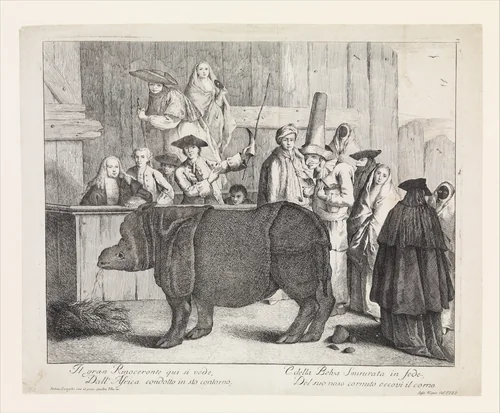
Longhi’s subjects occasionally extended beyond the aristocracy to capture the exotic and unusual, such as his etching The Rhinoceros, Clara, in the foreground, highlighting the diverse visual interests of the period. Though his active career was relatively brief, his precise record-keeping remains vital for understanding eighteenth-century Venetian society. Today, major collections hold important examples of Alessandro Longhi paintings and prints, including the Art Institute of Chicago and the Rijksmuseum. Many of these important historical pieces are increasingly available as museum-quality, high-quality prints entering the public domain.
Source: Wikipedia · CC BY-SA 4.0