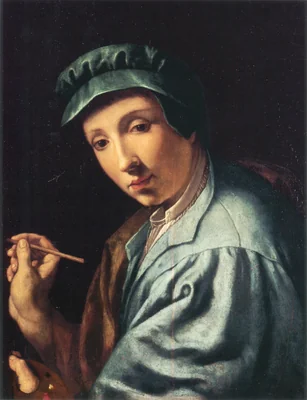
Alessandro Allori
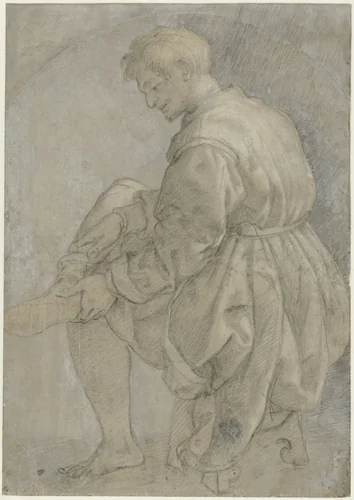
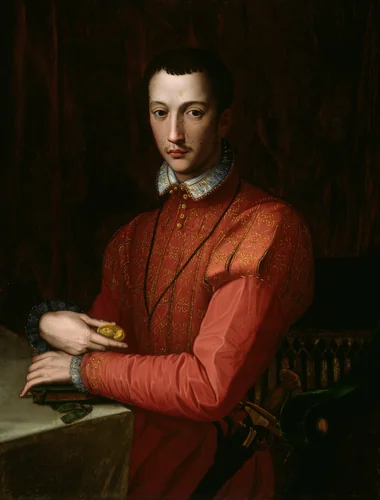
Alessandro di Cristofano di Lorenzo del Bronzino Allori (1535-1607) stands among the most significant practitioners of the late Mannerist Florentine school. Active during a complex period of artistic transition, Allori maintained a substantial and active workshop across the second half of the sixteenth century, producing works that rigorously adhered to the stylistic dictates of refined Florentine classicism. While widely recognized as a painter, his enduring artistic legacy is perhaps best understood through the meticulous precision and intellectual rigor evident in his extensive preparatory drawings.
Allori’s primary career goal was to perpetuate the high standards established by his artistic father figure, Agnolo Bronzino. It is a subtle irony that while his adopted surname suggests a direct lineage, Allori often struggled to escape the imposing shadow of his mentor's formidable reputation, committing himself instead to preserving rather than radically transforming the Mannerist idiom.
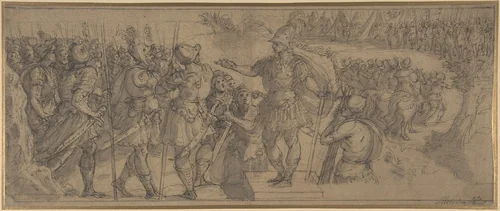
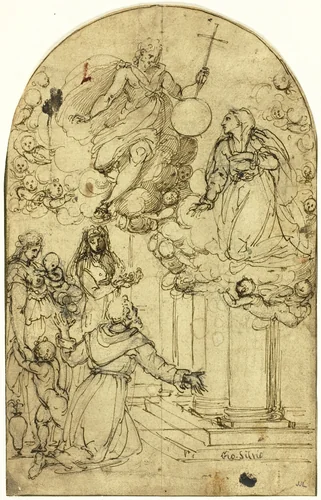
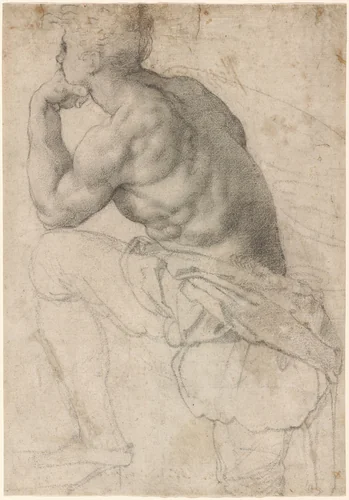
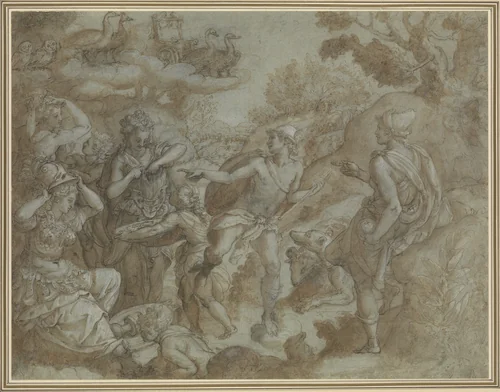
His surviving corpus, which includes major holdings across American institutions—notably the Art Institute of Chicago, the National Gallery of Art, and the Metropolitan Museum of Art—reveals a master technician dedicated equally to form, narrative, and decorative detail. Allori’s known output ranges from preparatory sketches for grand historical compositions, such as Design for a Narrative Frieze: A Commander Addressing His Troops, to precise architectural and ornamental studies.
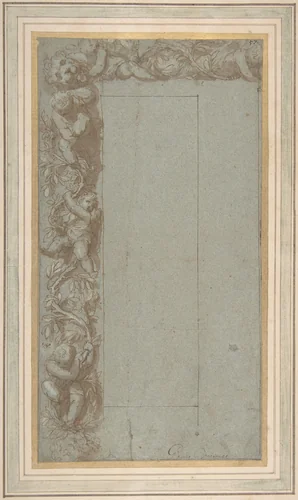
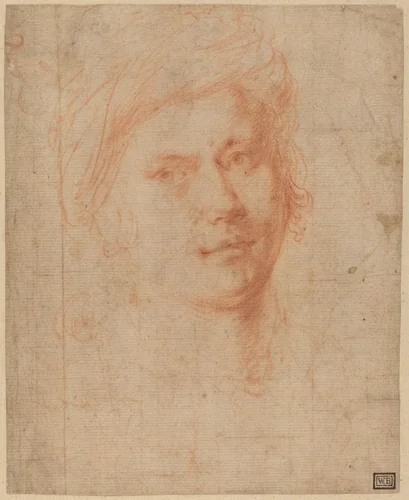
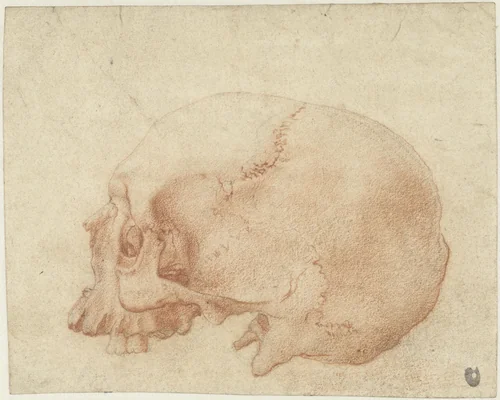
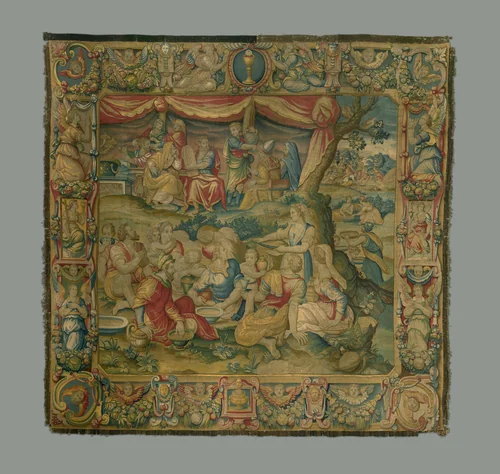
The intricate draftsmanship evident in pieces such as Design for Ornamental Border with Foliage, Putti and a Lion's Head demonstrates his mastery in creating the complex visual rhythms necessary for monumental fresco cycles and courtly decorative commissions. Furthermore, his dedication to academic investigation is clear in works like Studie van een schedel, underlining the rigorous anatomical understanding that underpinned the elegant, often elongated figures typical of the Florentine Mannerism style.
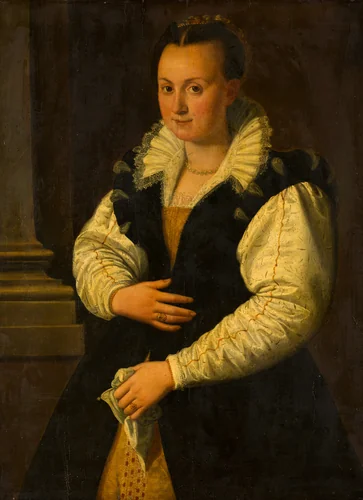
Despite working within the strictures of established courtly taste, Allori’s contribution lay in sustaining the standards of technical drawing and precise modeling during a period when art was rapidly evolving elsewhere. Today, the detailed preparatory sketches and finished Alessandro Allori paintings continue to inform our understanding of workshop practice during this transitional period. Many of these important historical documents have since entered the public domain, and the growing availability of high-quality prints and downloadable artwork ensures that Allori’s sophisticated technical vision remains globally accessible.
Source: Wikipedia · CC BY-SA 4.0