Aleksei Kruchenykh
Aleksei Kruchenykh (1886-1968) stands as one of the most intellectually radical figures of Russian Futurism, a movement that fundamentally reshaped the literary and visual culture of the Russian Silver Age. Working primarily between 1912 and 1917, Kruchenykh’s significance rests not just on his poetry but on his pioneering work as an artist, theorist, and designer of the new, revolutionary book object. His collaborations included key figures such as Vladimir Mayakovsky, David Burliuk, and Kazimir Malevich.
Kruchenykh is perhaps best known as the co-inventor, alongside fellow Futurist Velimir Khlebnikov, of zaum, a linguistic experiment that sought to transcend conventional syntax and meaning through the use of non-referential, 'nonsense' words. This desire for total linguistic freedom found its definitive early expression in the poem Dyr bul shchyl (1912), a short, bracing manifesto on the primacy of sound over sense. This dedication to stripping language down to its raw components positioned him as a maximalist within the Futurist camp.
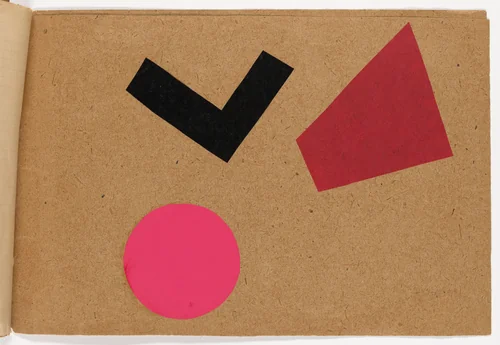
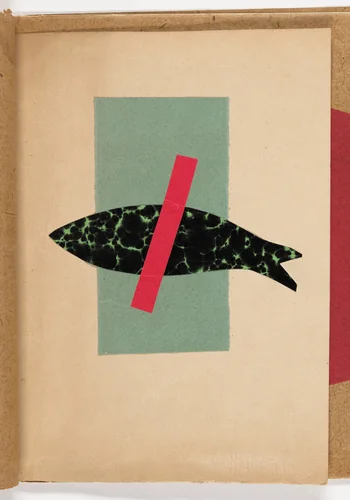
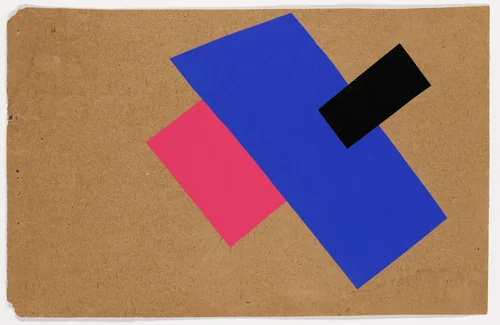
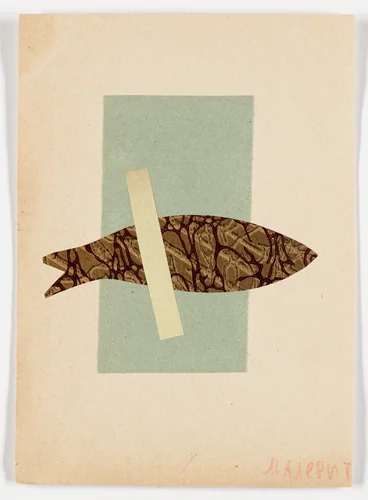
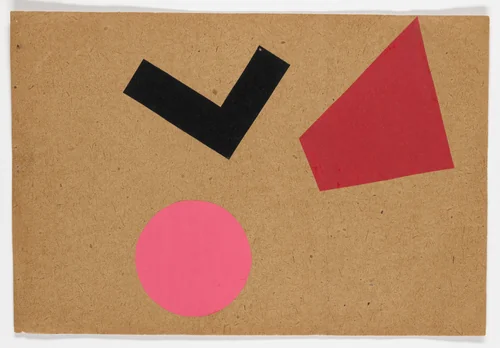
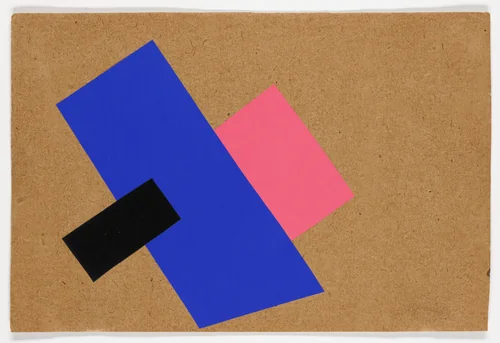
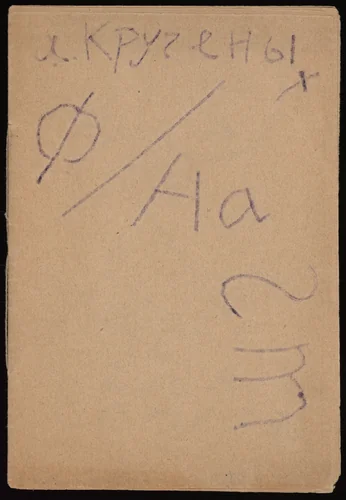
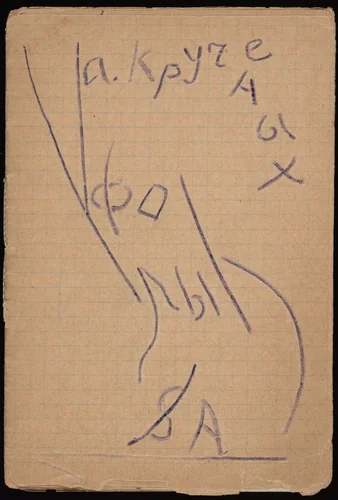
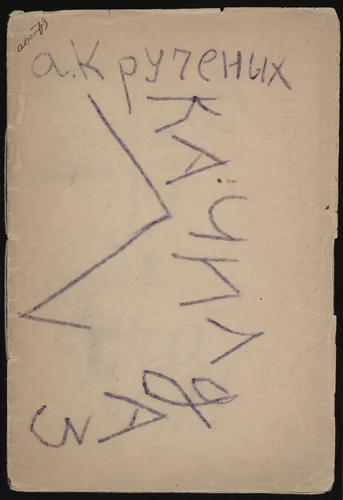
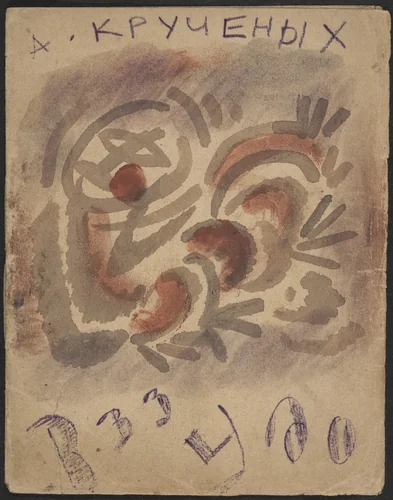
His primary artistic output was the illustrated book, a medium he treated as an integrated, multi-sensory environment. These highly rare, small-edition volumes fused handwritten, lithographed text with raw, often primitivist illustrations. Among his most consequential works is Mirskontsa (Worldbackwards), a 1912 publication where the relationship between image and text is deliberately strained, forcing the reader into active, unconventional participation. Furthering his pursuit of the total artwork, Kruchenykh wrote the libretto for the landmark Futurist opera Victory Over the Sun, whose sets were designed by Malevich in 1913.
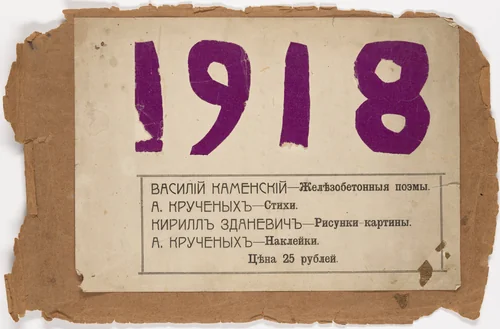
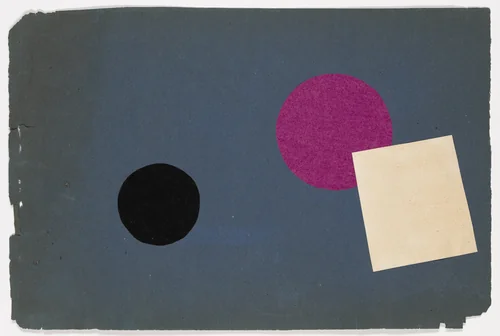
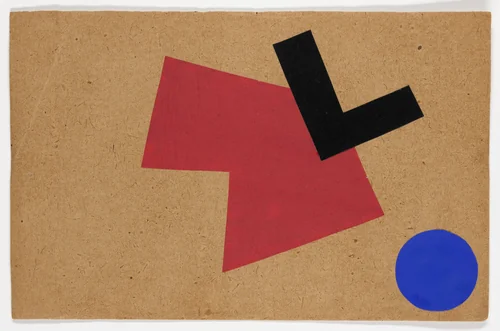
Though his active Futurist period was brief, culminating in the 1916 publication of his most famous book, Universal War, his concepts profoundly influenced subsequent avant-garde movements. Today, key folios from his inventive publications, such as those from Mirskontsa (Worldbackwards), are preserved in prestigious international collections, including the Museum of Modern Art, highlighting the enduring historical value of his work. Scholars and enthusiasts seeking access to these materials often turn to the growing body of public domain resources, where high-quality prints and downloadable artwork make Kruchenykh prints accessible for study.
Source: Wikipedia · CC BY-SA 4.0