Aleksandr Rodchenko
Aleksandr Mikhailovich Rodchenko (1891-1956) remains the most disciplined and demanding voice of the Russian and Soviet avant-garde. Working across painting, sculpture, photography, and graphic design, he was a pivotal co-founder of Constructivism, the revolutionary movement dedicated to applying artistic skill to social function and industrial production. Rodchenko’s early career, particularly between 1918 and 1923, marked a restless search for the aesthetic zero point, resulting in some of the most radical canvases ever produced.
Driven by a rigorous, almost scientific methodology, Rodchenko sought to strip painting bare, moving sequentially from dense geometry to purely linear structures. His early commitment to non-objective abstraction is powerfully documented in works such as Composition and the profound series known as Black on Black. These few paintings, including the severe and conceptually absolute Non-Objective Painting no. 80 (Black on Black), utilized matte black paint on canvas to deliver a conscious negation of traditional color and form. This series effectively pushed Suprematism, the abstract style established by Kazimir Malevich, to its logical, and for many contemporaries, unbearable, conclusion.
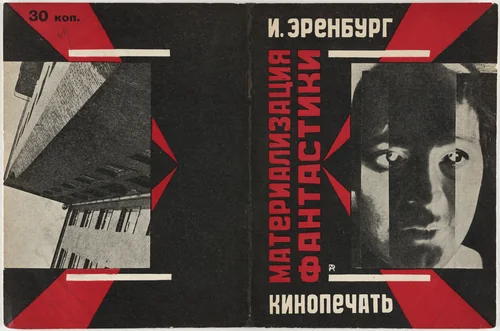
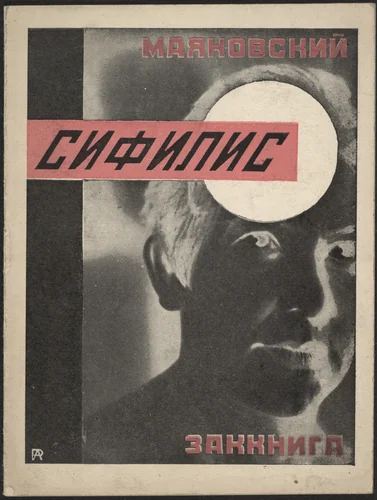
His belief in the social necessity of art led him to the infamous declaration of the ‘death of painting’ in 1921, after which he abandoned easel work entirely. This radical shift redirected his focus to practical production, including textiles, furniture, and eventually the dynamic photographic montages that defined the graphic language of the new Soviet state. He worked closely alongside his wife and collaborator, the artist Varvara Stepanova, their joint practice defining early Russian design standards built around material, texture, and economy.
Rodchenko’s pioneering use of industrial materials, drafting tools, and eventually the camera established him as a key figure bridging pure abstraction and functional design. His legacy encompasses the severity of his early Aleksandr Rodchenko paintings and the powerful, utilitarian graphics of his later years. Today, the foundational rigor of his designs ensures their preservation in prestigious institutions like the Museum of Modern Art, making museum-quality study possible even through high-quality prints derived from institutional collections.
Source: Wikipedia · CC BY-SA 4.0
![Soviet Russia Encircled by the White Guard, 1919 (1919 Sovetskaia Rossiia v belogvardeiskom okruzhenii). Poster no. 21 of 25 from the series The History of the All-Union Communist Party (of Bolsheviks) in Posters (lstoria VKP[b] v plakatakh) by Aleksandr Rodchenko, print, 1926](https://img.artbee.org/52721d70-d182-4568-9654-6cb9c2c92801/small.webp)
![The Beginning of NEP, 1921–22 (1921–22 Nachalo NEPa). Poster no. 23 of 25 from the series The History of the All-Union Communist Party (of Bolsheviks) in Posters (lstoria VKP[b] v plakatakh) by Aleksandr Rodchenko, print, 1926](https://img.artbee.org/b8ac4458-8a96-4837-8a20-d04504af40b9/small.webp)
![The Death of Lenin, 1924 (1924 Smert’ Lenina). Poster no. 25 of 25 from the series The History of the All-Union Communist Party (of Bolsheviks) in Posters (lstoria VKP[b] v plakatakh) by Aleksandr Rodchenko, print, 1926](https://img.artbee.org/c4ed0e9a-5e77-4c3e-a84c-f636a9f87c61/small.webp)
![The End of the Civil War, 1920 (1920 Okonchanie grazhdanskoi voiny). Poster no. 22 of 25 from the series The History of the All-Union Communist Party (of Bolsheviks) in Posters (lstoria VKP[b] v plakatakh) by Aleksandr Rodchenko, print, 1926](https://img.artbee.org/700c6ae1-782d-47b4-9035-77ac71f87713/small.webp)
![The Epoch of Zvezda and Pravda, 1911–1914 (Epokha “Zvezdy” i “Pravdy,” 1911–1914). Poster no. 13 of 25 from the series The History of the All-Union Communist Party (of Bolsheviks) in Posters (lstoria VKP[b] v plakatakh) by Aleksandr Rodchenko, print, 1926](https://img.artbee.org/90115f64-b384-4f89-9397-1244da36d487/small.webp)
![The February Revolution, 1917 (1917 Fevral’skaia revoliutsiia). Poster no. 15 of 25 from the series The History of the All-Union Communist Party (of Bolsheviks) in Posters (lstoria VKP[b] v plakatakh) by Aleksandr Rodchenko, print, 1926](https://img.artbee.org/3dee5121-d166-4feb-bc56-1fb50a978c30/small.webp)
![The First Six Months, 1918 (1918 Pervoe polugodie). Poster no. 18 of 25 from the series The History of the All-Union Communist Party (of Bolsheviks) in Posters (lstoria VKP[b] v plakatakh) by Aleksandr Rodchenko, print, 1926](https://img.artbee.org/96f648f4-1382-4656-85dc-99f4f9065455/small.webp)
![The October Revolution, 1917 (1917 Oktiabr’skaia revoliutsiia). Poster no. 17 of 25 from the series The History of the All-Union Communist Party (of Bolsheviks) in Posters (lstoria VKP[b] v plakatakh) by Aleksandr Rodchenko, print, 1926](https://img.artbee.org/5573d573-25c2-40a8-9bac-80b79f55d438/small.webp)
![The Russian Social-Democratic Workers’ Party in the Years of Reaction, 1907–1911 (Ross. Sots.-Dem. Rab. Partiia v gody reaktsii, 1907–1911). Poster no. 12 of 25 from the series The History of the All-Union Communist Party (of Bolsheviks) in Posters (lstoria VKP[b] v plakatakh) by Aleksandr Rodchenko, print, 1926](https://img.artbee.org/56e831ca-718a-4527-b20e-51e84d041446/small.webp)
![The Second Congress of the Russian Social-Democratic Workers’ Party (1903). The Appearance of Bolshevism and Menshevism (II s”ezd Ross. Sots.-Dem. Rabochei Partii [1903]. Vozniknovenie bol’shevizma i men’shevizma). Poster no. 6 of 25 from the series The History of the All-Union Communist Party (of Bolsheviks) in Posters (lstoria VKP[b] v plakatakh) by Aleksandr Rodchenko, print, 1926](https://img.artbee.org/5167f792-fddd-41d4-a2fc-ef36b57892a4/small.webp)
![The Workers’ Movement at the Start of the 1900s (Rabochee dvizhenie v nachale 900-kh godov). Poster no. 5 of 25 from the series The History of the All-Union Communist Party (of Bolsheviks) in Posters (lstoria VKP[b] v plakatakh) by Aleksandr Rodchenko, print, 1926](https://img.artbee.org/c8c3a47b-8820-4fde-b5c5-274ea3b6f73a/small.webp)
![The Years 1906–1907 (1906–1907 g.g.). Poster no. 11 of 25 from the series The History of the All-Union Communist Party (of Bolsheviks) in Posters (lstoria VKP[b] v plakatakh) by Aleksandr Rodchenko, print, 1926](https://img.artbee.org/bca76830-0792-4f80-aae3-6e763116587d/small.webp)
![Unions of Struggle for the Liberation of the Working Class. The First Congress of the Russian Social-Democratic Workers’ Party. 1894–98 (Soiuzy bor’by za osvobozhdenie rabochego klassa. 1yi s”ezd Ross. Sots.-Dem. Rab. Partii. 1894–98). Poster no. 3 of 25 from the series The History of the All-Union Communist Party (of Bolsheviks) in Posters (lstoria VKP[b] v plakatakh) by Aleksandr Rodchenko, print, 1926](https://img.artbee.org/fff446e6-decd-45e9-8d2f-a447896dffdd/small.webp)
![“Economism” and "Iskra" (“Ekonomizm” i “Iskra”). Poster no. 4 of 25 from the series The History of the All-Union Communist Party (of Bolsheviks) in Posters (lstoria VKP[b] v plakatakh) by Aleksandr Rodchenko, print, 1926](https://img.artbee.org/b2178e18-204c-4870-b9be-61f860ff942d/small.webp)