Albert Pinkham Ryder
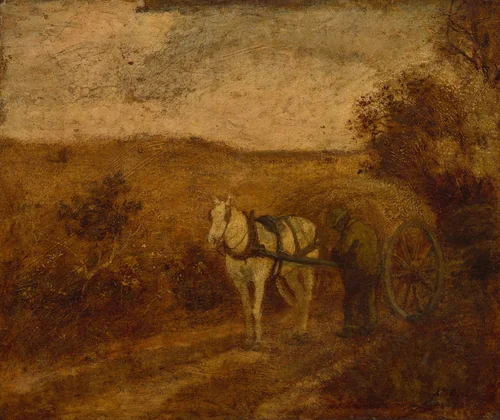
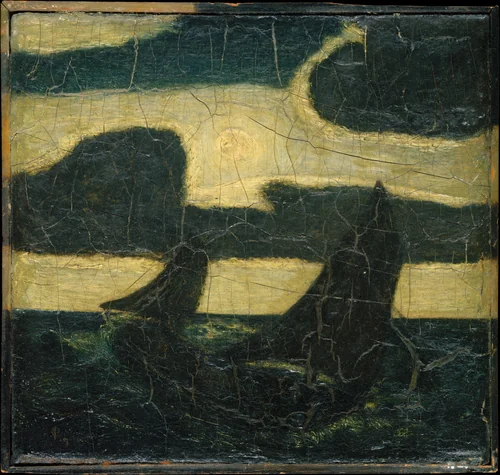
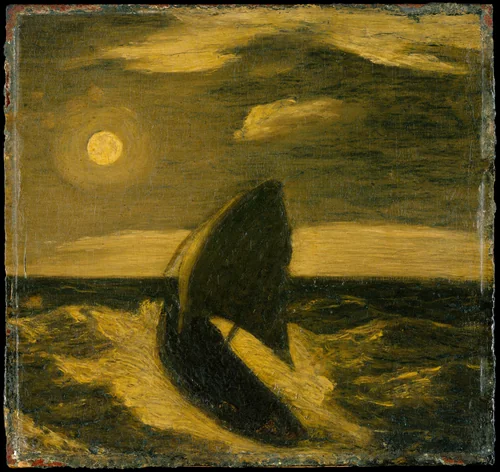
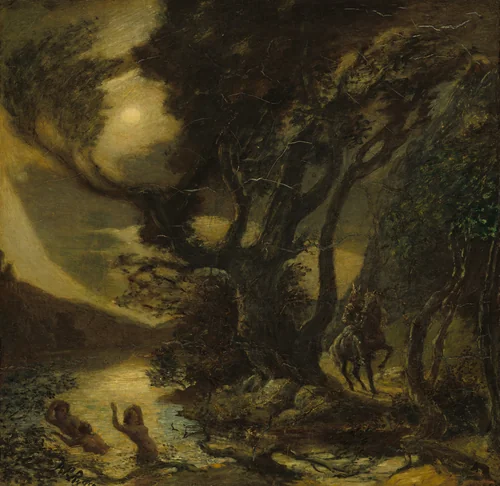
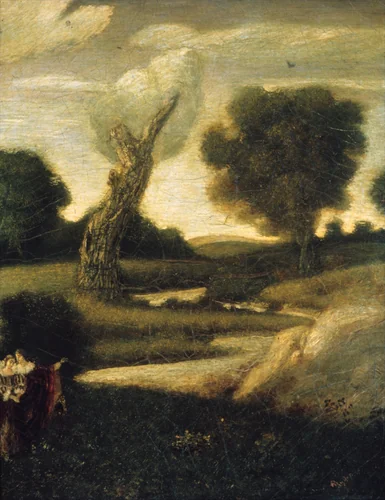
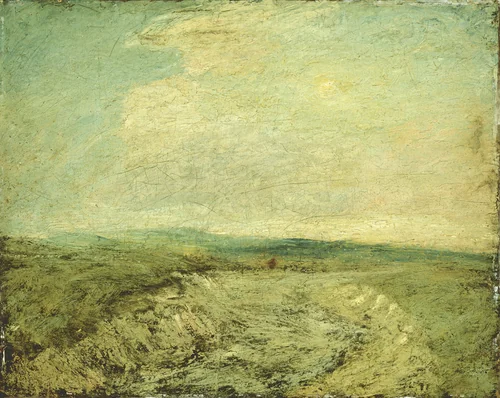
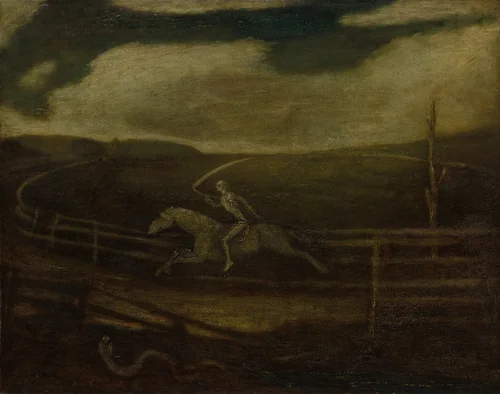
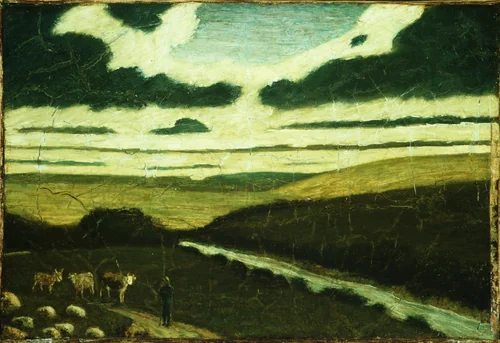
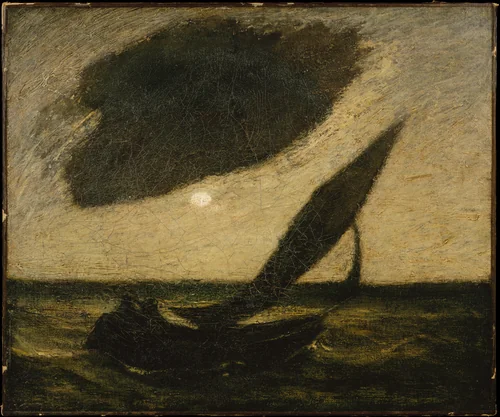
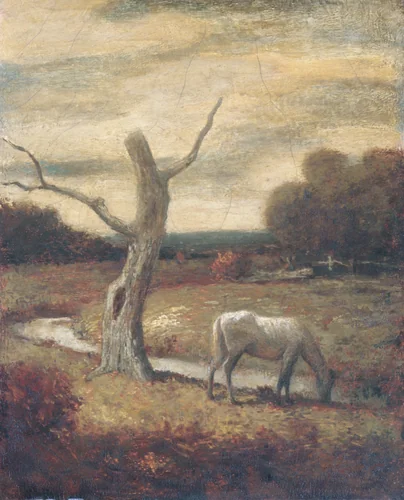
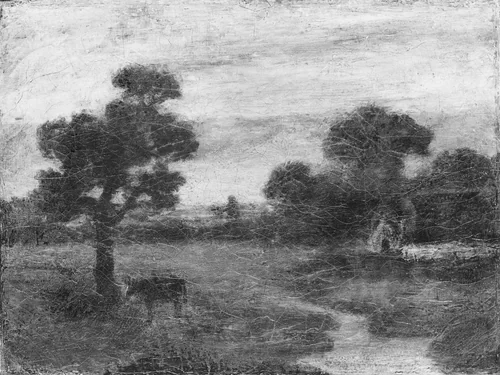
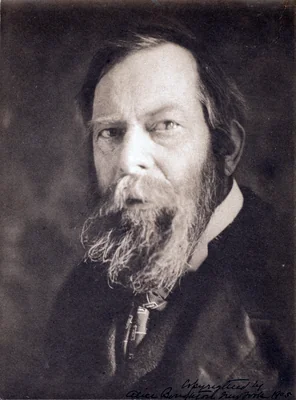
Albert Pinkham Ryder (1825-1913) holds a singular position in American art history, having established a visual language that departed radically from the dominant realistic trends of the late nineteenth century. His output, though comparatively small in number, is defined by an intense focus on allegorical subjects and deeply atmospheric seascapes that resonate with a profound, often turbulent, interiority. Ryder’s canvases, such as Moonlight Marine and The Toilers of the Sea, functioned less as depictions of objective reality and more as meditations on poetic and mythological themes.
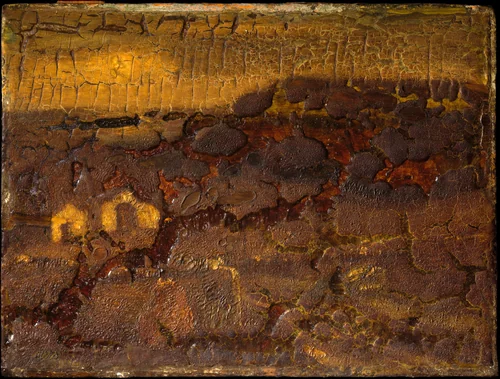
While his emphasis on subtle variations of color and mood aligned superficially with the rising movement of Tonalism, Ryder’s methodology was uniquely innovative. He was distinctive among his contemporaries for strongly accentuating underlying form and structure, often treating the canvas surface itself as a tactile, sculptural entity. This commitment to structure over strictly realistic detail has led many art historians to recognize Ryder’s work as a crucial, early precursor to the formalist concerns that would define European Modernism. His technique frequently involved the application of multiple, thick layers of pigment, sometimes mixed with unconventional varnishes and materials, a laborious and idiosyncratic process that often took the artist years to complete. These methods generated the characteristic, luminous depth of his work, but they also cemented his reputation for eccentricity among his New York colleagues.
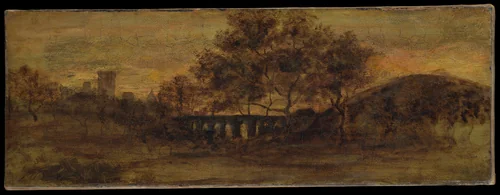
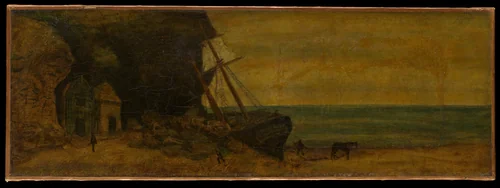
The enduring legacy of Albert Pinkham Ryder paintings stems from this tension between narrative mood and near-abstraction. Works like The Bridge and The Smugglers' Cove remain cornerstones of American Symbolism and are actively studied for their influence on subsequent generations. His masterpieces are housed in the permanent collections of prestigious institutions, including the Metropolitan Museum of Art, the National Gallery of Art, and the Cleveland Museum of Art. Today, a significant portion of his oeuvre is in the public domain, ensuring that this compelling and idiosyncratic vision is continually accessible worldwide. Museums and collectors frequently utilize downloadable artwork derived from these originals, allowing audiences access to high-quality prints that maintain the integrity of Ryder’s challenging and captivating surfaces.
Source: Wikipedia · CC BY-SA 4.0