Albert Newsam
Albert Newsam (1809-1837) holds a crucial position in the history of American printmaking, specifically as one of the earliest, most skilled, and most impactful practitioners of lithography in the United States. His relatively brief but immensely productive career spanned the medium's critical early adoption phase, establishing a visual lexicon for antebellum America’s professional and political classes.
Newsam’s early life provides a unique dimension to his artistic trajectory. Born deaf in Steubenville, Ohio, and orphaned as a child, his evident artistic aptitude led to his crucial relocation to Philadelphia, then the country's printing capital. There, he received his education and training at the Pennsylvania School for the Deaf. His eventual mastery of intricate portraiture and commercial detail, achieved despite the profound communication barriers of the period, speaks to an exceptional focus and dedication within the demanding field of early American commercial art.
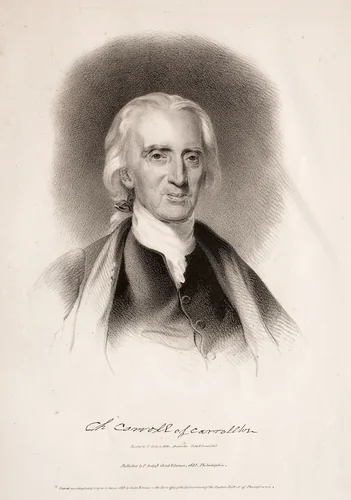
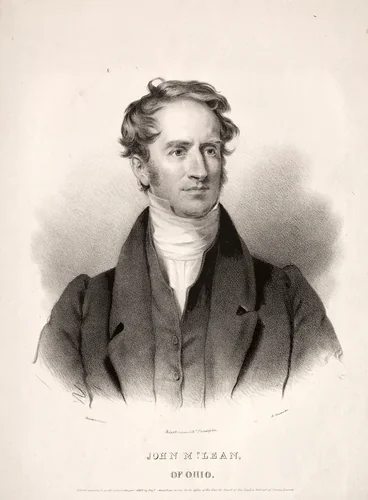
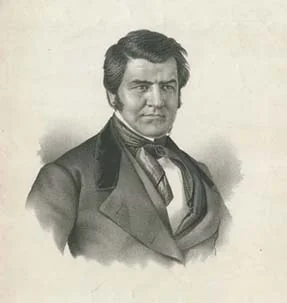
Newsam utilized the swift reproducibility of lithography to great effect. He moved beyond simple reproduction, focusing primarily on original portraiture that captured the dignified likenesses of figures like Charles Carroll of Carrollton, Maryland and Senator John McLean of Ohio. By dedicating his talent to rendering the nation's rising class of politicians, doctors, lawyers, and influential businessmen, Newsam successfully elevated lithography from a novel, secondary reproductive technique to an authoritative medium essential for public representation. His work was pivotal in raising the medium’s prominence in the United States.
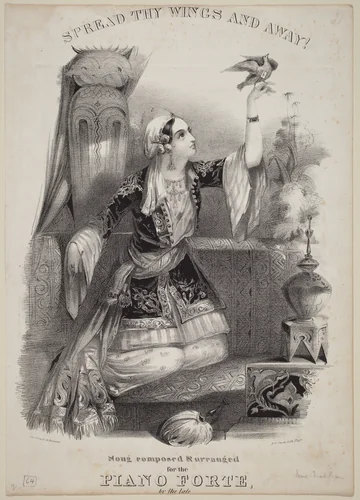
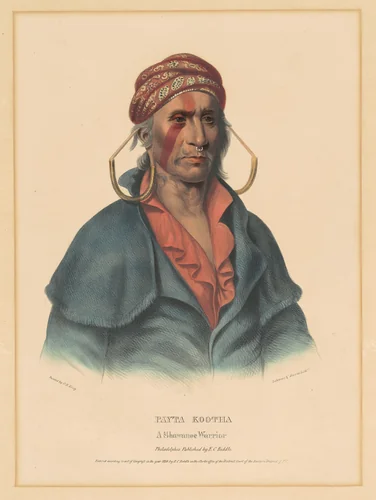
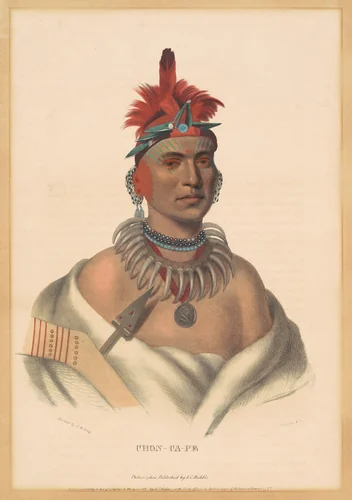
His output was diverse, including contributions to specialized medical volumes, popular publications like sheet music (evidenced by the charmingly titled print Spread Thy Wings and Away!), and documentary portraits of cultural subjects, such as the compelling depiction of Payta Kootha, a Shawnee Warrior. Newsam’s technical precision set a high bar for clarity and authoritative representation within the medium.
His historical significance is recognized by his inclusion in major institutional holdings, including the National Gallery of Art and the Cleveland Museum of Art. These Albert Newsam prints remain preserved as museum-quality examples of early 19th-century American graphic arts. Because many of these historic images are now in the public domain, they continue to serve as accessible sources for scholars and enthusiasts globally, often available today as downloadable artwork.
Source: Wikipedia · CC BY-SA 4.0