Albert Gleizes
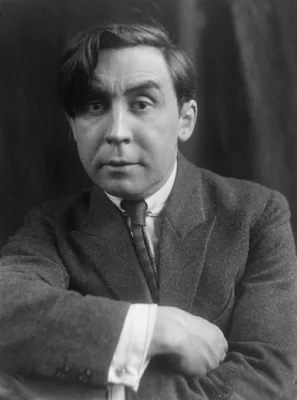
Albert Gleizes (1881-1953) was not merely a participant in the invention of Cubism, but one of its most rigorous and dedicated systematizers. A French artist, philosopher, and theoretician, Gleizes established his foundational role in modern art history by co-authoring the first major theoretical treatise on the movement, Du "Cubisme" (1912), alongside Jean Metzinger. This seminal text provided the intellectual framework for the formal innovations then shaking the foundations of European painting, effectively translating radical aesthetics into coherent principles.
Gleizes was instrumental in mobilizing the movement beyond its initial Parisian moment. He was a founding member of the influential Section d'Or group, dedicated to analyzing and extending the implications of fractured spatial representation. Unlike many of his peers, Gleizes’s complex intellectual contributions found immediate, thoughtful reception abroad, particularly in Germany, where his theoretical writings were integrated into the curriculum at the Bauhaus. He was also a respected member of Der Sturm, cementing his international profile early in the century.
His active, organizational spirit extended significantly during his four crucial years in New York. Gleizes played a pivotal role in making America aware of the rapid shifts occurring in modern art, acting as a crucial bridge between the explosive creativity of Europe and the nascent American avant-garde. While other artists focused primarily on aesthetic revolution, Gleizes consistently focused on structure, an organizational impulse reflected in his involvement with the Society of Independent Artists, the Abbaye de Créteil, and his later co-founding and direction of Abstraction-Création. He exhibited regularly at Léonce Rosenberg’s prestigious Galerie de l’Effort Moderne in Paris.
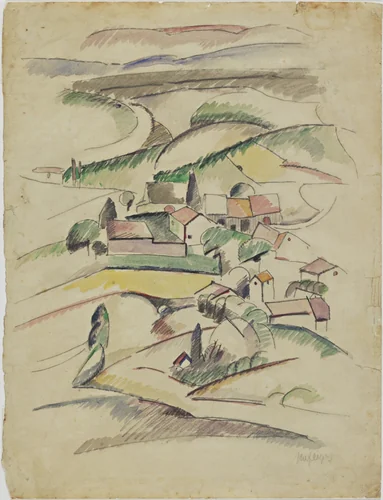
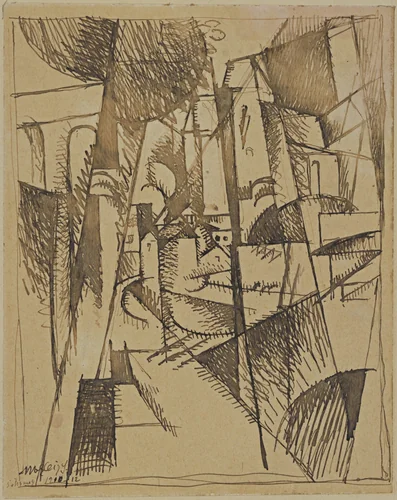
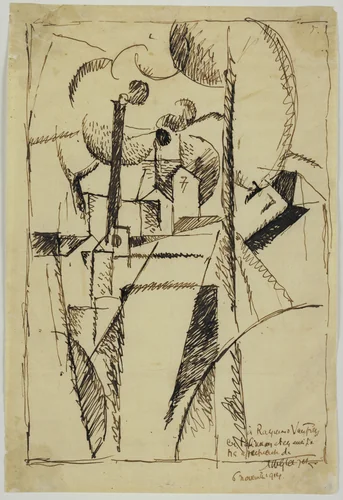
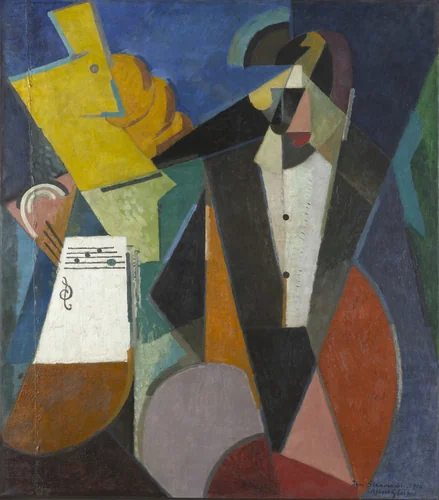
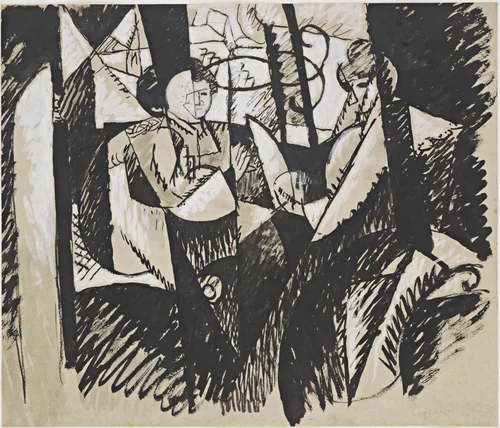
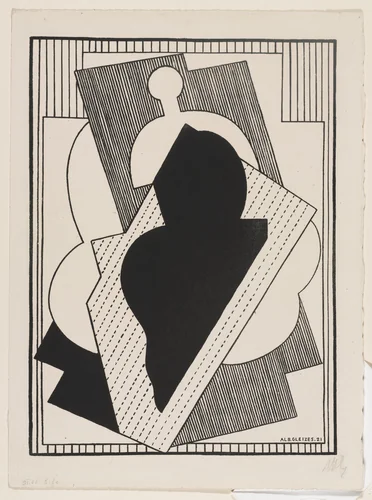
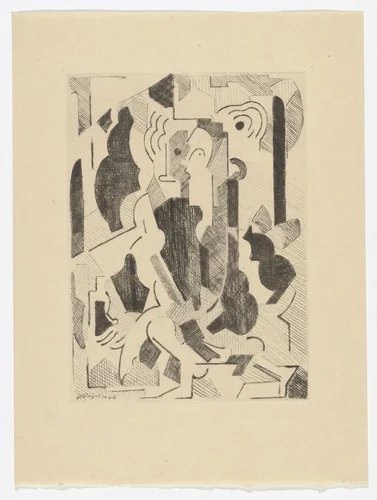
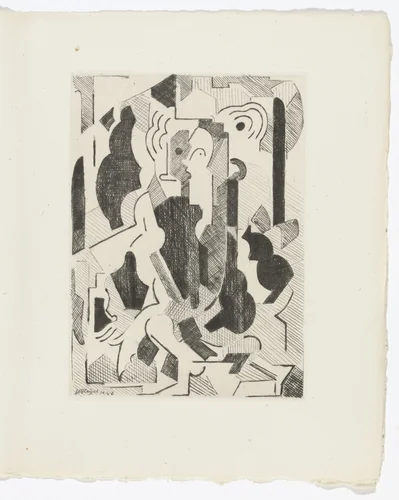
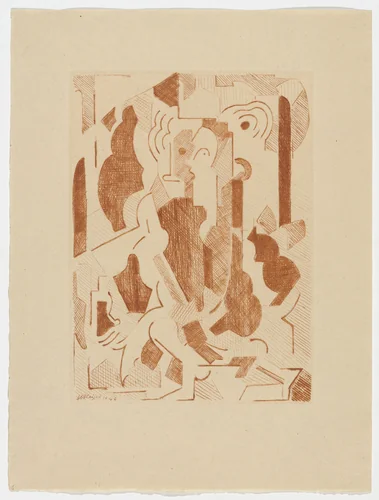
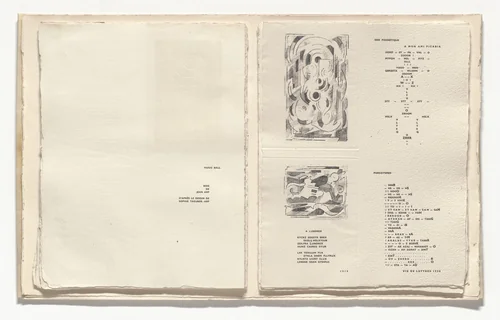
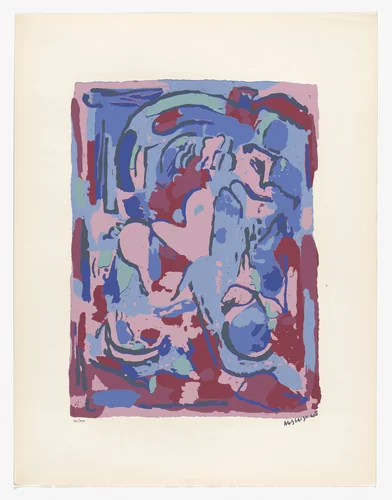
From the mid-1920s through the late 1930s, Gleizes’s energy increasingly turned toward philosophical inquiry, culminating in dense theoretical volumes such as La Peinture et ses lois and Homocentrisme. Nevertheless, his output of fine art remained consistent, exemplified by analytical works such as Houses in a Valley, Landscape with Bridge and Viaduct, and the formal mastery presented in his Portrait of Igor Stravinsky. Today, many of Gleizes’s works, including his graphic output like Two Women Seated by a Window, are available as Albert Gleizes prints through public domain initiatives. His legacy as an architect of Cubism is confirmed by the sustained inclusion of his work in leading institutions, including the Museum of Modern Art.
Source: Wikipedia · CC BY-SA 4.0